Showing posts with label review. Show all posts

Monday, July 25, 2016

KAYO DOT - Plastic House On Base Of Sky

Revisiting the uncharted 

This review opens with a title that some of the more perceptive readers would deem absurd and some of the more radical ones, stupid. And yet, the very existence of postmodernism is dependent on how good we are at reshaping the old into the new. Making it as refreshing and intriguing as it was when it first came into being. More important still, is the ability of postmodern art to go beyond this premise, set itself in a world of its own and exist there on its own terms. And who else would I ever believe capable of creating an entire world for their music to exist in, if not Toby Driver. Ever since Choirs of the Eye (and for some, early maudlin of the Well), Toby's musical identity has been shining through layers of inspiration and styles he has explored. None of what he did has ever seemed either derivative, calculated or entirely spontaneous and the fact I don't really understand how or why he does what he does made me wonder - is it part of the fun? Yes, it actually is a big chunk of it - admiring someone's brilliance while being blinded by it.

It's obvious that Toby has decided to create more focused, more compact albums after Hubardo, arguably the most diverse and, without a doubt, the longest album in his career. Unlike pre-Hubardo records, both Coffins on Io and Plastic House on Base of Sky feature a somewhat vintage sound. Strongly inspired by Susumu Hirasawa and by the 80s icons, with the most prominent being David Bowie, Joy Division, Brian Ferry, Vangelis and the whole era of progressive rock and electronica, Toby does what he does best - he dislocates all elements from their hinges, makes them his own, unique - they are doors to his plastic house. It's especially true on the new record where the border between organic and synthetic became completely blurred. As radical as ever, Kayo Dot takes no prisoners despite leaving their extreme rock roots behind. Plastic House on Base of Sky is a playground for electronic polyphony, unrelenting, rhythmically complex and intense but as usual, a profound feeling of purpose grows stronger with every subsequent spin. This is one of those records that interact with the listener on the most personal level possible, mostly because the artistic process itself knew no compromise. That's why reviewing Kayo Dot albums is so daunting - the band doesn't try to prove anything to anyone. Toby seems to be lost in a maelstrom of creativity and despite fiercely pushing the envelope, he never loses track of what makes Kayo Dot music so engaging: the unrefined, frantically honest emotional charge put into it.

The latest Kayo Dot release catches Toby Driver drifting further and further away from his extreme rock roots, deep into the unknown where the old merges with the new to become something, somewhere. To be honest, it has never mattered to me if it's metal or not. Despite being extreme in a general sense, Kayo Dot was never meant to appeal to metal fans or fans of any other specific genre. I honestly don't know who is this music addressed to, and I doubt it is actually addressed to anyone in particular. All I can say is that you should approach the album with an open mind and forget what you know about art-rock, jazz, progressive electronica or synth-pop. Plastic House on Base of Sky is neither of those things. It is more.


Sunday, January 17, 2016

CANNIBAL CORPSE - Kill

Killer stuff!

I have had a long, complicated but, all in all, romantic relationship with this album. Not being a die-hard Cannibal Corpse fan, I have never listened throughout their entire output so I don't feel entitled to decide if Kill is or isn't the best album by the notorious veterans of brutal death metal. All I can say is that, after many years of my music taste oscillation and existential crescendos (whatever that means), it ended up being my favorite album by them.

It might have been the case with releases like The Bleeding, but Kill is a rare case of a brutal death album that keeps my attention riveted past the first two tracks. A common problem with many brutal death metal releases is the lack of variation that leads to the chicken pâté syndrome - the first sandwich is delicious, but by the end you feel a little sick. Now, the thing is Kill isn't even that varied. What makes it engaging is that, even if uniform, the songwriting and the clean-yet-organic sound production are both solid throughout. In some ways it's the quintessential modern brutal death metal album. Pleasantly familiar and straightforward structure-wise, it elevates the quality of the bulk of its content with mindbogglingly groovy breaks ("Murder Worship"), passages of technical brutality ("Five Nails Through the Neck") and, most of all, spot-on rhythm variations ("Necrosadistic Warning"). In other words, instead of kicking your ass all the time, it unexpectedly slams your head into a wall, breaks your nose, pulls your eyes out and hits you in the stomach. It basically makes you suffer. Sadly the songwriting gets more generic towards the end of the record and that's actually my only - although serious - problem with the album.

All that being said, Kill's biggest selling point is what made every other Cannibal Corpse album before it so successful. It's genuinely brutal and it doesn't try to prove anything else besides its unwavering devotion to what makes brutal death metal enjoyable - gore, groove and grit. In other words, if Kill were a slasher movie, it would be a good slasher movie. If not for the more generic songwriting in the second half, it would have been a great one.

Friday, August 28, 2015

A FOREST OF STARS - Beware the Sword You Cannot See

Beware a double-edged sword...


Today's metal music follows postmodern trends just like any other branch of culture and therein lies the cause of its focus on eclecticism. It's neither a bad nor a good thing in itself but it is, in all certainty, inevitable. Now, some bands have proven capable of turning this artistic philosophy into something truly special and sometimes even innovative. All too often, however, the pursuit of diversity comes at the expense of artistic identity. And well, the new album sees A Forest of Stars doing just that: struggling to keep their unique style intact while adding new elements to the mix. And yeah, well, the whole image sort of went out of focus.

With their steam-powered, victorian/occult/psychedelic, british-to-the-bones “doomened” black metal, A Forest of Stars used to stand out from other post black metal bands. Their sound on Opportunistic Thieves of Spring was both singular and wonderfully consistent - the album simply felt genuine for lack of a better word. Same goes for a little bit more diverse and folky A Shadowplay for Yesterdays which still had a distinct, unique feel to it despite its numerous influences. Adding new elements to the sound they’ve already established was certainly the easiest way to go but also the least fortunate. While the band’s latest offering is not a bad record in itself - quite the opposite, actually! - it falls short of what I wished to hear. The core sound is still as amazing as it used to be. Folk parts are mesmerizing as ever and black metal passages as passionate and ferocious (just listen to the first half of "Hive Mindless"!). Ironically, the first track is the biggest showpiece of what went wrong - none of the tracks that follow are as messy style-wise as this one. To cut a long story short, in addition to the usual elements, there are post-rock, classic prog, psychedelic rock (Pink Floyd), prog metal and avant-metal (most notably Unexpect) influences in the song and the whole album. 

All that may sound promising on paper and works pretty well in practice, but after listening to the whole thing I found myself underwhelmed with its obvious lack of focus. You see, the strength of their previous albums paradoxically lies in their ability to build something new and solid upon their diverse influences, not in adding them up. While I can see that the more surreal, elusive and complex nature of the music was intended, the band’s identity totters under weight of the ambition it has to carry.

Saturday, April 25, 2015

KAYO DOT - Gamma Knife

He could not remember the dream

Gamma Knife cuts through his skull as soon as he falls asleep. His vision is dim and blurred at first but it brightens with every second and he feels moved by the blissful, eerie spectacle that unfolds before him. The knife suddenly reaches his mind and the bubble bursts. All becomes vivid as the chaos spreads around and all calmness drowns in its foaming depths. How long did it last? Can time be measured in a place like this? He doesn't know. But as the edge of radiation withdraws, he is in a peaceful place again. Soft light soothes his senses as sounds of music sustain his slumber. And it all ends with silence... Now that I lost most of you with my failed attempt at artistic writing, let's begin. 

As by far the most obscure album by Kayo Dot, Gamma Knife is a negative of itself. An amazing case of an album that contradicts itself and yet, by the power of its overarching idea, works wonderfully as a whole. Now, if I just came down to earth for a moment... Gamma Knife is intentionally made that way to create an impact. The album begins and ends with stunningly beautiful and soothing, choral chamber music recorded in studio, but at its core are three tracks recorded live in concert. Could it go any weirder? Well, yes! In short, the middle part is as eclectic, avant-garde and extreme as it could get in less than twenty minutes. It's basically like a surreal 20s film where avant-chamber music meets jazz, RIO and black metal and have a shot of absinthe. The black metal side is somewhat reminiscent of Deathspell Omega and early maudlin of the Well. Compared to other avant metal acts like Ephel Duath, Gamma Knife sounds much more organic and bold in its exploration of avant jazz and chamber music. Strong psychedelic presence in the vein of Swans is also noticeable. However, what binds all these elements together to give them common identity, is the unmistakable Kayo Dot vibe that, like a totem spirit, animates every single album by this band. 

I must admit that at first Gamma Knife didn't work for me as well as it does today, and I did not fully embrace its inner dualism until just a few months ago. Just like any other album by Kayo Dot, it's definitely not an easy one to get into but it's all the more rewarding once you do. Less focused on patient theme evolution of Choirs of the Eye and more on tight, aggressive experimentation known from Hubardo, Gamma Knife is a truly unique avant-garde rock ride. Let it sink in and you'll have one damn peculiar daydream every time you give it a spin.

Thursday, April 16, 2015

ENSLAVED - In Times

Two steps forward, one step backwards

Enslaved is a Norwegian extreme metal band that managed to carve out an admirably big niche for their bipolar "melodic/harsh" black metal, in a similar way Opeth did in the death metal milieu. Every time I try to explain how I feel about this progressive black metal sound, I find myself in an unenviable position of being for the band's ideas but against the way they're executed. You see, I've listened attentively to several of their albums so far (Vertebrae, AEO, RIITIIR and just a little bit of Isa) and the only one that actually (literally?) grabbed me by the ears, chopped them off and poured ten gallons of pure bliss into the bleeding orifices, was RITIIR... well, shit got graphic much sooner than I planned.

The problem I have with Enslaved has already struck me when I listened to AEO for the first time. A good album for sure. Its bold mixture of prog rock and quite atypical nordic black metal is intriguing, but it somehow lacks identity - quite a feat given the sheer originality of the concept - that would make it something more than just a blend of stylistic ingredients. Technically well-written as it may be, music on Vertebrea or Axioma Ethica Odini doesn't feel focused on giving any meaningful artistic impact. Black metal passages tend to drag aimlessly and mellow parts seem oddly misplaced. Now listen, if not for RIITIIR, I'd be tempted to say it's just me, a member of the mentally challenged minority for whom this stuff simply doesn't work as intended. RITTIIR, however, is a testimony to the fact that Enslaved are indeed capable of turning their ideas into an inspired, evocative, well-rounded creation, yet for some unfathomable reason they tend to keep falling short of their potential. 

Now, time for In Times. To cut a long story short, In Times is a blend of the semi-classic prog rock sound of Vertebrae with the atmosphere and black metal edge of Axioma Ethica Odini plus a - regrettably - tiny spatter of RIITTIIR's spacious and adventurous eclecticism. Oh, and vanilla prog metal in the vein of Dream Theater's also here, especially in the later stages of the album, and the role it plays is sadly a leading one. Due to this fact, In Times is even more structurally complex than the previous album but that's exactly where the rub is. When form takes precedence over essence, you know something went south, amirite? I mean, some of the more "spontaneous" experiments certainly add to the experience in a good way (e.g. chants and theme progression in "Thurisaz Dreaming" and the fantastic "One Thousand Years of Rain" and "Nauthir Bleeding"), but some of the rhythmic variations seem redundant. And these irregular meters ("Building with Fire")... I mean, come on guys, even Meshuggah usually uses 4/4. It's almost like the band was afraid of being judged by a jury of prog metal elitists that would otherwise deem the album "not progressive enough, 3/10". I mean, give me a break, you made RIITIIR for fuck's sake! And it all worked just fine.

Even though some people seem to be more and more weary of the sound Enslaved keep exploring, In Times does not sound stale to me. For the most part, it is a very enjoyable progressive black metal album with a decent amount of fresh ideas and it certainly will make most die-hard fans headbang in ecstasy or at least nod their bearded (prog)heads in admiration. Sadly, while it's varied and very well written - with more clean vocals than ever - it lacks the human touch that made its fantastic predecessor so good and, well, timeless.

Friday, March 27, 2015

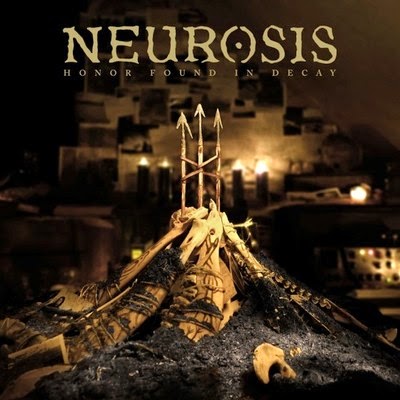
NEUROSIS - Honor Found In Decay

We follow the Earth, the Earth follows the Stars...


Despite having released ten records of which at least three have become timeless classics of post/sludge metal, the Oaklanders don't rest on their laurels. Honor Found in Decay is yet another step forward in their sustained evolution and I'm telling you, it's good. It's not, mind you, a matter of stylistic progress anymore, at least not in the sense we've got used to. These men don't intend to break the ground anymore, nor are they willing to exhibit the fiery aggression known from their early albums. Still, in my book Honor Found in Decay stands out as the most inspirational Neurosis record since Times of Grace. 

Noah Landis. This man is a boiling pot of inspiration and originality, never failing to add a unique layer to a theme or, when needed, take the lead. His synths and samples have always been the gray eminence of Neurosis, the defining element of every album since Through Silver in Blood. Don't get me wrong, though, the band is like a clockwork: take one cog out and it doesn't work. They've been together for almost 20 years and it shows; the incredible bond between them is not just noticeable in Honor Found in Decay, it animates the entire thing. Neurosis is one of those very few bands that can turn a bucket of raw sludge into a blissful, poetic, almost cleansing experience. And they really nailed it this time round. Honor Found in Decay is a heavy, lyrical, Kyuss-tinged sludge metal album, abounding with both tonal and atonal themes that work together perfectly. When it comes to harmony and disharmony, it is one of their most bipolar records, but the reason it works so well is that there's a consistent artistic vision that keeps the whole thing focused throughout. It certainly is the first Neurosis release to have the old elements and the new ones (mostly the singer-songwriter solo output by von Till and Kelly) work so well together. 

Honor Found in Decay is like a night ride through a southern desert, like a poem whispered by flickering shadows dancing around a bonfire. It's unrelenting yet calming; crushingly heavy yet soul-stirring; brooding and soulful but not devoid of hope. While it is not by any means as bold as The Eye of Every Storm was, it sounds much fresher than Given to the Rising ever has. I can safely say that Honor Found in Decay is the most mature and genuine effort by Neurosis in a long, long time. A contemplative, spiritual, understated, poetic, hypnotizing album. And yes, definitely recommended.

Sunday, November 2, 2014

AGALLOCH - The Serpent & the Sphere

Spiritual Oregano

Hello and welcome to my first Agalloch review. Open your eyes, raise your arms and behold the beauty of the universe... You may wonder what's the reason for such a theatrical introduction, so I hasten to explain that primo, Agalloch has never started an album with a more exalted track than "Birth and Death of the Pillars of Creation" (oh come on, really?). Secundo, the whole album is incredibly solemn. So, I just had to keep pace with the band, you see! The Serpent and the Sphere is the fifth LP from Agalloch, preceded by bleak and raw Marrow of the Spirit. This one on the other hand is much more accessible. And here's why...

Before I tell you why, one more thing. Don't think I'm belittling the concept behind this album. If only for how consistent every Agalloch album is, the band should be praised. As usual music, artwork and lyrics complete each other and create a stunningly atmospheric whole. Still, even though the sound production fits the music on The Serpent and the Sphere pretty well, I can't help but miss the raw black metal sound of the previous record. Agalloch's music relies on atmospheric layers rather than composition complexity and doesn't really need such a polished sound production. It just seems more genuine with a rawer one. Songwriting itself is strong as ever, even if I got a deja vu more than once. While Agalloch doesn't necessarily get stale, the polished sound would allow of more experimental approach. What we got instead is an atmospheric doom/black metal album that sounds a tad less post-metal. Neo-folk influences, on the other hand seem to have gained more ground. I may not like all the changes in direction but, despite all that, it's a very enjoyable and catchy record. Just another proof that Agalloch's got the magic, no matter what!

Every so often I catch myself turning a blind eye to anything that, in my humble opinion, Agalloch does wrong. Songwriting is sometimes rough, and pathos sometimes too abundant. Yet still this music is so honest and genuine that I can't help but get carried away with it. Even though a little less bold than before, Agalloch still stands out as one of the more original extreme metal acts. All fans of atmospheric metal should give this album a go, especially newcomers, as The Serpent and the Sphere is their most accessible release to date.

Saturday, November 1, 2014

Shinsekai yori (From the New World)

Stuck in a loop

(please note that it's a spoiler-free review)

We love fantasizing about the future of humanity, shaking our fists at the stars and anticipating amazing discoveries. Through oceans of blood and suffering, we keep pushing forward, always so hopeful about a better tomorrow. The faith we have in ourselves seesms in fact justified, as we can easily trace the progress made throughout history. Humanity has become more civilized, open-minded, peaceful. And even though there's still a lot of room for improvement, our achievements to date give us a firm conviction that we're on the right track... but are we, really? What if it's all just a lie we keep repeating, a convenient platitude that keeps us going? What if deep down in your heart, nothing has changed, ever?

We all have gone through that kind of story at least once in our lives. A story that you get hooked on gradually rather than from the get go, one that you don't necessarily enjoy as much as some more accessible ones. And yet it leaves a mark on your soul that won't ever fade away. Shinsekai Yori is definitely one of those. Set one thousand years in the future, the story of this anime bears no resemblance to any sci-fi futuristic settings I have seen so far. Some would expect a highly developed, space-faring civilization, others would settle for a singularity-based vision of human evolution or even a post-apocalyptic dystopia. That's where the series has already broken with convention and it only breaks more of it later on. There's almost no advanced technology in the anime whatsoever, except for electricity (very scarce) and some rudimentary accessories, and yet it doesn't seem post-apocalyptic. The closest reference for the world depicted in Shinsekai Yori would be the pre-medieval Japan seen through a utopian filter. If I were to classify the story in any way, I'd say it's a modern psychological fantasy, as it doesn't dabble in hard science and instead draws on an elegant concept of cantus. Telekinesis (on the molecular level), for this is what the term refers to, is handled with much care and insight in Shinsekai Yori. It's not just a superpower, it's a potent yet dangerous ability that can lead its user to almost godlike achievements, but also to unspeakable atrocities. The biggest of which is to be revealed in the last episode.

The aura of mystery and menace pervades the story long before it unveils any of its dark secrets. The animation, even though technically inferior to some high-profile productions, boasts a stunningly beautiful artistic design. Accompanied by equally effective soundtrack, as eclectic as the anime itself, Shinsekai yori is a thrilling and unsettling ride through a bitter-sweet utopia. It's all the more effective due to the profoundly allegoric character of the series. It is an elegant and painful critique not only of the caste-based society, government and blind faith people have in it, but also of the unspeakable evil that lies dormant in all of us. If only for the unprecedented setting and concept, the anime is worth watching. If, however, you keep a constant lookout for ambitious productions that venture where no other does, Shinsekai Yori is an absolute must-see.


Monday, October 27, 2014

DE MAGIA VETERUM - The Deification

Eradication of Self

I hereby announce that Maurice "Mories" de Jong is a warped god of madness, instilling awe and terror alike in all those who dare venture into his realm. And let's get one thing straight, it doesn't get more intense than this. Trust me, I've heard a lot. If anything compares, it can only be another Mories' project like Gnaw Their Tongues, Cloak of Altering or Aderlating. There is, however, something utterly fascinating about this abyssal poetry, and despite its painfully cathartic impact on my psyche, I keep listening. 

The fourth album by De Magia Veterum is another experimental black metal journey through the realm of unfathomable darkness. Ear-splitting production underlies discordant glissandi and sonic outbursts of soul-stirring madness, but wait, there's more! With sinister sampling and breakneck rhythm patterns, Mories intensifies this, already extreme, experience. THE DEIFICATION is in many ways a blend of MIGDAL BAVEL and THE DIVINE ANTITHESIS. It's dense and soulful as the former and dissonantly chaotic as the latter. And there's also what's always been setting Mories apart from other fairly similar artists like Deathspell Omega and Blut aus Nord. I'm not trying to belittle their status in any way, but unlike De Magia Veterum, you can still follow their reasoning. Here, it all sounds as if it already existed as a boiling plasma within the creator's subconscious, and he converted it into sounds no man could normally conceive. Despite being consistent and meaningful, the notion of structured chaos doesn't really apply here. Structured chaos is liable to deconstruction and analysis. THE DEIFICATION is rather a poetic depiction of chaos as it really is. 

In many ways, this is a masterpiece and an unbearable sonic assault at the same time. Let's just say it's a great addition to your metal collection as it may expand your horizons to the extent you would never imagine possible. Remember though, no matter what kind of extreme music style you're a fan of, De Magia Veterum may be just too much for you, or something you will love with a bizarre, ravaging affection.

Monday, October 20, 2014

MAUDLIN OF THE WELL - Part The Second

Maudlin farewell

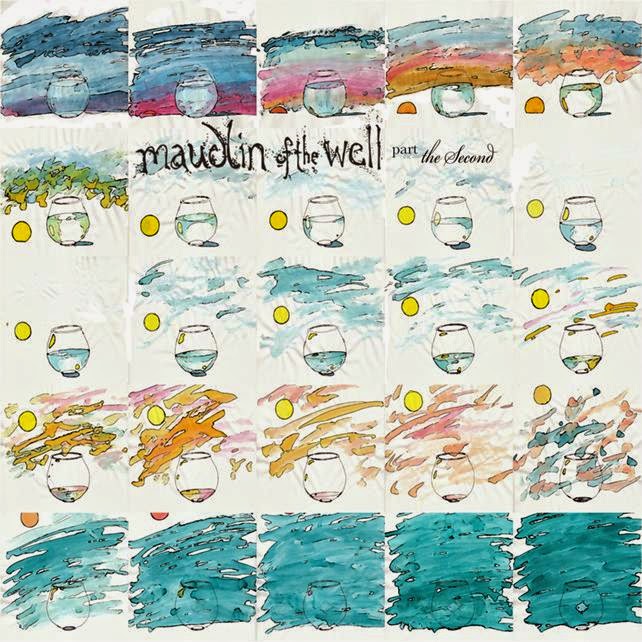
As it is my 100th review on MMA, I shall celebrate by writing a really long, lousy review, freed of my usual hasty formula or any stylistic restraints. You will be bored, moved and bored again. Your time will be wasted with the only consolation being that I wasted even more of it myself. Let's do this thing!... as this paragraph is not long enough yet (that wouldn't look good on the main page, would it.) instead of ending it, let me talk succinctly about the final installment in maudlin of the Well discography. That's what we gathered here for after all. Part The Second was fan funded and it's an entirely independent work with artwork conceived by Toby Driver himself. For those who don't know, he's the mastermind behind all motW and Kayo Dot albums, as well as co-creator/co-founder of Tartar Lamb, Vaura and several other projects. He's a genius, what can I say. Along with Mories of Gnaw Their Tongues, he's my favourite avant rock composer. Speaking of avant rock, I've just realized my 100th review on a metal site is actually of a non-metal album!

Anyway, let's talk maths here. Part the second... but how? In half? Only two parts? Five? Or maybe, judging by the artwork, time is relative, and there's no substantial difference between one second and one day. These are just fragments of the same substance which is apparently infinite. If not for us and our limited perception, there wouldn't be any fragments at all as you can't see contours of seconds, minutes, hours ticking on the clock or years, decades, centuries gradually turning your body into atomic dust. Time's abstract. Yet still we managed to part it, rationalize it. Even though this album looks like it was conceived rationally and divided into 5 tracks, it's not. It's art and art hates rational thinking. Art is based on intuition and driven by feelings. Sounds pretentious? Well, we could certainly have a healthy discussion about what is art, what isn't or if it even is a real thing at all. I'm divided. It seems not to be a real thing but when I start to think it is, I consider art to be something that escapes rationalization. For now. Everything can be explained scientifically and surely will, yet for now there still are some gray areas when it comes to psychology and neurology. I'm glad there are. You have to live in a bubble in order to keep your sanity. However small the bubble is, you can't let it pop or you'll fall into a trap of trying to look at yourself from the outside of your own reasoning, which is obviously self-contradictory.

Okay, without going too far into metaphysics, that's what I believe music is for. Not that music, or art in general, has any other purpose than to satisfy the one who makes it. For someone who listens to music, however, it has potential to be a gate into a world where you can understand and feel yourself without falling back on verbal reasoning. Whether music excites you, makes you happy and euphoric or moves you and makes you depressed, that doesn't matter. What matters is that for this brief moment you're free of restraints of your consciousness. I think that's why people often use drugs to "open their third eye", although lucky are those for whom music works like one. As far as I am concerned, some music does. Part the Second does. All that I've written until now was inspired by the album. If your first thought while going through this review was "This guy's high as fuck", then Part the Second really works. I'm sure some of you would gladly see more substantial commentary on the album, though. Here you go. Part the Second, as any abstract work of art, is a grower. I didn't fall in love with it instantly but my subconscious had already known I would have listened to it again. We tend to call it "getting hooked", intrigued by something for vague reasons. That's because you're not yet aware of something your brain already knows.

In terms of influences, it's the most seamless album by maudlin of the Well and Toby Driver in general. Maybe it's just me, but I can't name more than one influence without hesitation. The album surely is inspired by chamber music. Its structure could just as well be described as progressive/postmodern in a broad sense, but chamber music seems more precise to me due to a prominent role of violin passages. On the other hand, it plays with pacing and repetition in a similar way post-rock does. Luckily, you won't experience any straightforward, full-on build-ups that plague post-rock music nowadays. Part the Second is more sophisticated than that and for that reason it may appear as less accessible to some people. Still, to those accustomed to avant-garde complexity, this will be a refreshing experience. Part the Second doesn't do anything superfluous. It's just as complex as it has to be and never gets heavier than it should. What I say may seem quite vague, but this record really sounds as if it were aware of itself. Every sound, every word is there for a reason and for no reason at all. "This guy's higher than I thought". Well, hear me out, please! I believe that the more brilliant the work you create is, the more difficult it is to explain the choices you made. It's called talent. And talent is an unpredictable asshole.

Oh man, I'm fed up with this review so much right now. Nobody's going to read something that long anyway, so why bother? Most certainly because I felt like 100th review was a good occasion to do something different. Part the Second is one of those albums I couldn't review in a decent way, anyway. It's an album that gets to you on a very personal level, almost as if it were addressed directly to you. As if you were the only one to ever listen to it. The world is abstract after all, so maybe you are the only one listening to it? Maybe all is just an illusion? Or not even that. Maybe the bubble you're trying to preserve is all you actually have? Whatever the case, the final effort by maudlin of the Well is a reminder that music... is a drug! Haha, good one, ain't it?! You didn't see that coming, huh? Please, if you enjoy experimental music of any sorts, listen to Part the Second and get high from the experience. But secretly! Seriously people! Music's gonna be banned if someone from Da Guverment reads this review. I have to go, spec ops are at the door already!... [beep beep beep]

Saturday, October 18, 2014

KAYO DOT - Coffins On Io

Stellar!

Imagine a silver string stretched out across the room. Every of its seven segments is decked with objects of such a variety in shape, size, weight and colour, that they almost seem to be a random streak of elements, suspended magically in space. You can barely see what's linking them all. Yet every time Toby Driver and his ever changing team puts out an album, you instantly recognize who pulls that string. While Hubardo could be, as a last resort, described as a summary of all things Kayo Dot-ish, maudlin-ish and Driver-ish in general, Coffins on Io, just like Coyote before it, is a venture into new territories. 

However, while Coyote treads a bumpy path of chamber disharmony, Coffins on Io, instead of treading a path on foot, drives a Mustang '67 convertible along a desolate highway with southern lights in the night sky above. Every Kayo Dot album features a conceptual basis that provides the whole thing with a core. Even Hubardo was strangely consistent despite its eclecticism. Coffins on Io on the other hand is a rather focused effort... for this band. It is indeed an album heavily inspired by retro-futuro artists of the 80s, Vangelis to name just one. Equally noticeable is David Bowie's influence, especially thanks to Toby Driver's charismatic vocal delivery. You can also get some Joy Division vibes, especially in the second track. Brian Ferry also comes to mind. Generally speaking, songwriting is more minimal compared to the previous album and more focused on subtle evolution through repetition of themes. All that gives the album a quite psychedelic character. Still, somehow Kayo Dot once again escapes categorization and despite more traceable influences than ever before, it's still a band one of its kind.

Coffins on Io charms the listener with dreamy psychedelia and retro pop touches, but as any other Kayo Dot album it requires more than just your attention - it requires you to discover and feel the creative passion that boils just like the magma underneath the surface of Io. As your perception of the music evolves with time, the album does so as well, and before you know it, you're submerged in a polyphonic hell. And you know what? If this kind of hell exists, I'm going to sin as much as possible just to get there.

Saturday, September 27, 2014

CLOAK OF ALTERING - Plague Beasts

Altering Forever

True artists are restless, insatiable, always looking for modes of expression that would satisfy nobody else but themselves. Not us, mind you. You're just a guest, a spectator of this eternal struggle between artist and his creation. Ahhh, and Mories. Those who came across this man know exactly how unwelcoming he can be. Plague Beasts, third full-length record under the aegis of Cloak of Altering, is another experimental record that catches Mories fusing his diverse styles into one whole. And as usual, it's very well done.

Not as well as it used to be, though. Two previous records presented Cloak of Altering as a well blended combination of black metal, industrial electronica, classical and noise. Plague Beasts consists of pretty much the same ingredients, with a stronger emphasis put on electronic and noise aspects of the music. If you're familiar with the band and its black metal roots are known to you, you can easily trace them. It may not be so obvious to newcomers, though. For the most part Mories' songwriting is as strong as ever. Unrelenting, polyphonic assault of devilish tremolos, ominous symphonic synthesizers and seemingly chaotic syncopation suck you into a whirlwind of beautiful insanity. You can actually see the genuine passion put into this music as it bleeds out of your ears. Still, as much as I hate track-by-track approach, I have to say "Ash666urA" and "Into Celestial Hell", due to their more straightforwardly noisy character, feel a little uninspired in comparison with the rest of the album.

Plague Beasts is another step in CoA's exploration of the unique blend of avant-garde black metal and electronica known from previous releases. While it's easier to mark out individual sound elements this time round, it still is a strangely consistent, yet in parts flawed, record. Recommendable to metal and electronica fans with a weakness for a full-on approach, Cloak Altering latest album is another quality release from the enfant terrible of experimental underground.

Monday, September 9, 2013

KAYO DOT - Hubardo


A lonely Poet and the Eye of Leviathan

Are you proud of yourself, Toby Driver? Are you satisfied with having me as your eternal and devoted follower, speechless in the face of Hubardo's grandeur? If these questions were ever to reach Toby, I imagine the answer to them as follows: "Yes, we did it, we have transmuted the gleaming stone that fell from the moonless sky. Essence and forms blossomed beautifully from the eye of Leviathan and merged into this ever morphing sculpture of sounds. You can almost see it once you close your eyes, open your heart and let the ear follow the chisel."

In a way, Hubardo encompasses everything that Toby Driver has ever done with maudlin of the Well, Kayo Dot and Tartar Lamb, but in fact it is so much more. It's an individual, conceptual work and while it obviously sounds like something made by Kayo Dot, it is more adventurous, dense and technical than anything they've done before. To be completely honest, it's impossible to describe an album with total playing time of almost 100 minutes, that flows like a poem and stirs the soul with whole range of emotions. A record that stupefies with passionate outbursts of experimental extremity, seamlessly evolving into haunting chamber rock passages or krautrock psychedelia. I can't even fathom out how avant-garde jazz and fusion, chamber post-rock, experimental black metal and psychedelic rock can be so beautifully blended together and yet stay so consistent. More than that, Hubardo reaches and goes beyond any horizons; it crushes boundaries and escapes any classification except for one: Art that comes to existence out of pure need of creation itself; need to channel the ephemeral creative fire into an immortal work. And, as if that weren't enough, the album boasts some of the most intriguing ambiance and lyrics I've ever encountered. Ah, so much could be said about this surreal, otherworldly atmosphere and creative freedom. Freedom so moving and spontaneous, despite the staggering complexity of the music it gave birth to.

Hubardo, the seventh album by the avant-chamber-rock/experimental metal band Kayo Dot, is the ultimate evidence that music is boundless. It's one of those rare pieces of art that are so unique and passion driven, that any attempt to analyze and deconstruct it backfires on the reviewer. Even though you may stay indifferent to the beauty of Hubardo, you can't deny its singularity and sheer compositional genius of Kayo Dot. As far as I am concerned, I'm so deep in love with this wondrous album, that I feel ashamed by the very fact of publishing this review. A review that will not do Hubardo enough justice.

Friday, September 6, 2013

DISTORTED HARMONY - Utopia


Six pieces of noble cheese

Traditional progressive metal is often considered to be cheesy, stagnant and derivative. Let's see... "traditional" and "progressive". Not a very fortunate choice of words. Isn't the first one an antonym of the other one? Well, it is, usually. Distorted Harmony managed to bend the rules of semantics though. UTOPIA is dripping with traditional prog metal elements - keyboards, synths and virtuosity. All this, however, is just a wrapping for some really well-crafted, inventive and emotionally charged metal music.

As usual, production is not without significance. What often bothers me about modern prog releases, is that the sound feels overproduced and artificial. Fortunately, UTOPIA's sound is indeed polished yet infused with a healthy dose of organic sharpness and spiced with a pinch of old-school prog rock softness. As a result, all assets of the album - intricate passages, theme changes with underlying symphonic prog basis - are well highlighted.

"Apparently Michael Bublé wouldn't be so dull if he stopped rehashing ideas of Frank Sinatra and started a prog metal band." That's what I thought right after hearing Misha Soukhinin's voice in "Kono Yume". His vocals are one of the best things about Distorted Harmony, no joke! Expressive, well trained and original. Especially when compared to typical prog metal vocalists, trying to sound like James LaBrie or Geoff Tate. Misha's voice reminds me of Michael Bublé (darn, I feel like I shouldn't be saying this) and his timbre suits the music very well. As for the music, UTOPIA consists of six intricate compositions, deeply rooted in classic progressive metal and underlaid with strong symphonic prog rock element. All that tinged with Opeth's eclectic approach to harmony and... some pop catchiness. At times I feel like some of the cheesy parts could have been avoided but as a whole, UTOPIA is a top-notch progressive metal release.

I'm not by any means a fan of traditional progressive metal. I don't like Dream Theater and Queensrÿche get on my nerves. Still, I really like this album. So, even if you're not into this sub-genre of metal music, give Distorted Harmony a chance to, ermm... distort your tastes... clumsy pun, eh?

Wednesday, September 4, 2013

NEUROSIS - Given to the Rising

"I Would Rather Be Ashes Than Dust!"

They are still standing there. Immovable monoliths lashed by storms and parched with scorching sun, oblivious to trends and expectations, the gods of post-metal are still sending shivers down the spine of the world. Neurosis are like a raging storm, consistent yet ever changing, predictable yet still brooding and menacing. No matter how many times you have seen it coming, it fascinates you all the same.

On one hand, the tenth offering from Neurosis is a return to the TIMES OF GRACE sound. Once again raw sludge, doom metal and industrial merge into their inimitable style. On the other hand, post rock echoes of the two previous albums are also audible here. Actually, the only thing that distinctly separates Neurosis albums from each other is the atmosphere. This one is not an exception. GIVEN TO THE RISING is dark and dry like the Canyonlands covered with silver moonlight. A gloomy feel of spiritualism animates this album, shapes its soul in an elegant, understated way. It might be darker and more psychedelic than their previous records, but at the same time it's more sophisticated and restrained in its outbursts of brutality. It somehow reminds me of "There Will Be Blood" by Paul Anderson - sparing with means of expression, almost minimalistic, it's still extremely haunting and evocative.

I can see why this album is revered by the fans despite being a step backwards from THE EYE OF EVERY STORM. Being progressive is not a quality in itself. We often criticize artists for getting stale, but what they really do is loose the passion. If you create music with all your heart and soul, it doesn't really matter if it's progressive or not. Music like that is always fascinating.

Saturday, February 18, 2012

LES DISCRETS - Septembre et ses dernières pensées - 7/10

French shoegaze is so... French


Les Discrets are a band that creates music full of grey landscapes, sounds emerging from a milky fog, shoegazing passages reminiscent of fairy-tale drawings rather than fairy-tales themselves. Released by Prophecy Productions (Alcest, Antimatter), SEPTEMBRE ET SES DERNIÈRES PENSÉES is a dreamy, emotional, very bleak and most of all, quite successful album.

The sound suits the music perfectly. Production is clean yet quite organic and subdued. Guitars sound heavy when it's needed but Les Discrets stick to their post-rock and shoegazing side most of the time. To enhance the dreamy atmosphere, vocal lines are treated with reverb. I must say that vocal style of Fursy Teyssier is definitely an acquired taste, though. He's drawing from both shoegaze and post-punk styles and while I'm not completely convinced of his singing skills, reverb makes his performance more tolerable.

After a few hours with the music I began to realize how diverse influences one can find in the album. At first listen, SEPTEMBRE ET SES DERNIÈRES PENSÉES seems to be an ordinary french post-rock/shoegaze album in the vain of Alcest or Amesoeurs. Obviously, there are similarities among them since all these acts share at least one band member, but Les Discrets seem to be the most interesting of all of them. Stylistically, the band draws from post-rock ambiance and shoegaze arrangements but such genres as post-punk, black or doom metal are noticeable in the music as well. Not to mention very well crafted acoustic parts, deeply rooted in the neo-folk tradition.

Fans of Alcest may love this album. I think it's one of the best efforts that French post/shoegaze scene has to offer. Even if you're not a fan of the style, there's enough of enchanting passages and emotion-provoking melodies, to get interested any fan of atmospheric rock.

Monday, February 13, 2012

UNEXPECT - Fables of the Sleepless Empire

"Demon of the Opera: or, Surreal Rollercoaster: or, Mercy! My head is on the edge of overheating!"

This is an intense piece of avant-garde metal. I mean INTENSE. Unexpect's third full length record is an unrelenting beast, spawned by Ascendance Records. On its musical way it has devoured such genres as klezmer music, symphonic black metal, opera, electronic, jazz, classical chamber music and some other tasty styles that stood on its way. Oh my... It seems it's about to devour... YOU!

Such a dense and complicated record requires a crystal clean production. So, if you're looking for a fuzzy sounding and discordant avant-garde, you won't find it here. FotSE is a perfectly produced album with an impeccable sound. Every instrument (vocals, violin, guitars, 9-string bass... wait, what?!) has its space in the mix and thereby is easily distinguishable in the wave of sounds this crazy bunch bombards us with.

A book could be written about the music played by Unexpect. I must admit that on the first listen I was completely overwhelmed by its diversity and intensity. While the album may seem a bit inconsistent at first, its strange coherence becomes apparent with time. Unexpect are unbelievably talented songwriters and skilled musicians. Their mix of dark cabaret ambiance, modern electronic spices, chamber orchestrations, extreme metal impetuosity and progressive virtuosity, seems to be performed without effort. While sometimes I get an impression of thematic overload, the fact that it's a well-flowing album is undeniable. Most of all though, I think there's something that makes this intricate music surprisingly accessible. It's either beautiful vocal lines by the frontwoman Leilindel or Unexpect's great talent for thrilling passages. Well, both of them I guess.

Extraordinary. Intense, intriguing, technical and... brilliant. List of adjectives goes on and on. With this almost perfect creation, Unexpect has proven that virtuosity doesn't have to deprive the music of soul. That should be an important lesson for some leading prog metal bands. I can't help but admire these people, admire them for creating this exacting, surreal and emotion-provoking journey. I'm happy I've set out on it.

Friday, February 10, 2012

CLOUDKICKER - Beacons

Silent film

I have really mixed feelings about that record. Cloudkicker's second album, BEACONS, is undoubtedly very interesting effort and given the fact it's released for free, it's even more awkward to rate it with 3 stars. I promise, I'll explain myself. But now for something completely different...

Damn those tricky one-man baaands! They use computer generated drums and think they're cool. Well, they are. Cloudkicker is anyway. Both his drums, guitars and bass sound convincing. As for drums, they're not as realistic as drum set from hell in CATCH 33 by Meshuggah but still realistic enough. Guitars feel a bit too sterile for my tastes but the fact they're heavy and perfectly executed is undeniable. For a homemade album the sound is just amazing.

Less original and more personal yet still technical. That simple phrase describes the music in BEACONS pretty well, but I'll elaborate on the subject in order to seem more intelligent. So, despite being an instrumental collection of songs, BEACONS is a concept album with a story told in... song titles! It's a story about a plain crash, or should I say a desperate report from the crew, just before the crash. I must say that's what's best in the album - dramatic tension that pervades the whole concept is thrilling. It's like a silent film created with sounds instead of images. Stylistically, Cloudkicker went completely opposite way of what I've expected though. Instead of developing his progressive side, Ben Sharp focused on drama and more traditional approach to riffs and melody. So-called djent is still there, but now it's more of a spice than a defining factor. Don't get me wrong, it's an album loaded with excellent riffs and emotion provoking build-ups ("Amy, I love you" shines here) but its repetitious nature makes it tiresome just too many times.

All in all, BEACONS is a solid album with some great features and some really bad ones too. It's still among the best records in djent as it presents a new approach to the style unlike the mass of young djent bands that have nothing interesting to offer (besides making Meshugah's style more accessible and melodic). If you're into post metal, you may love it. Well, get it to find out, it's free anyway!

Thursday, February 9, 2012

GRAYCEON - All We Destroy

Hello, this is cello

Chamber metal. Hah, perfect name for a style Grayceon presents on their third full-length record entitled ALL WE DESTROY and released by Profound Lore Records, a label renowned for hosting such bands as Agalloch and Altar of Plagues. It is dark, imaginative, organic, unusual and very, very genuine concept album. And there's cello. And the cellist is a woman. And she sings in the album! Mother of God!!!

"Organic" and "chamber" are the words that come to my mind while listening to ALL WE DESTROY. Thanks to masterfully performed, downtuned guitar passages, the sound is not flat, despite the absence of bass guitar (cool, right?). All instruments sound both natural and clean. The production is organic to the extent of giving me an impression of a live concert in a little music club! Really, really great work.

The music played by Grayceon is called chamber metal as it incorporates chamber orchestration provided by the cellist Jackie Perez Gratz and "pickless" yet heavy guitar playing by Max Doyle. Alternatively it's often tagged post metal for it's diversity of genres from outside the metal one - classical, post-rock and progressive rock music. Songs in ALL WE DESTROY are full of well flowing passages and despite their length, every track seems to have its own identity. They drag on a bit sometimes but hey, none of them is overdone! As for vocals by Mrs Gratz, there's still some space for improvement but it can be safely said, that her relatively low pitched voice and emotionally charged singing can send a shiver down your spine.

Grayceon is gradually mastering an incredibly demanding style they have created and become more and more self-confident with every album. While ALL WE DESTROY can be a bit tiresome experience, its freshness and beauty outweighs all of its drawbacks. If you're into chamber music, yearning for fresh approach to progressive metal or just want to experience something genuinely emotional, get this album!

Wednesday, February 8, 2012

ALCEST - Écailles de lune

A bit schmaltzy

There was quite a lot of hype around that album in metal oriented media, praising it for beautiful atmosphere and enchanting melodies. I'm not that enthusiastic about it though. ÉCAILLES DE LUNE, being the second Alcest release, is indeed a charming yet a little bit shallow piece of post metal.

Now, production is great. As the record is often referred to as a black metal album(I don't get it, is it because of these 3 minutes of hellish shrieking in the second track?), I must say the sound is polished and clean. It kept enough of its natural state to be called organic though. Most of all, the producer did everything she/he could to enhance dreamy atmosphere of songs that Neige plies us with.

I'm a big fen of Fan (Fen of fen...? right, fan of Fen!), a British post black metal band, so I hoped Alcest would sound somewhat similar. While both bands can be described as a combination of black metal, shoegaze and post rock, proportions are completely different. Alcest's ÉCAILLES DE LUNE is, first of all, a shoegaze/post-rock album with some black metal leanings. Vocals are mostly clean, treated with strong reverb and somewhat hidden in the mix. And they are shoegaze vocals which I don't like that much. The biggest problem is the music though. Don't get me wrong, there are moments of bliss while listening to ÉCAILLES DE LUNE but some schmaltzy parts just spoil it for me. I think restrained songwriting is the thing Neige should work on, because his songs just miss some of the imagination you can hear in Agalloch's or Fen's music. Still, there's enough of great passages and skillfuly written compositions to consider it a solid album.

For fans of post-rock and shoegaze this is a real treat. ÉCAILLES DE LUNE is a successful combination of shoegazing melodies and post rock atmosphere - all seasoned with a pinch of black metal rawness. Despite the fact it somewhat lacks in depth, I can still recommend it for its well constructed songs and originality in terms of style. And... wait, lyrics are in french! Awww, I take back all negative things I've just said!!