Showing posts with label 2012. Show all posts

Saturday, April 25, 2015

KAYO DOT - Gamma Knife

He could not remember the dream
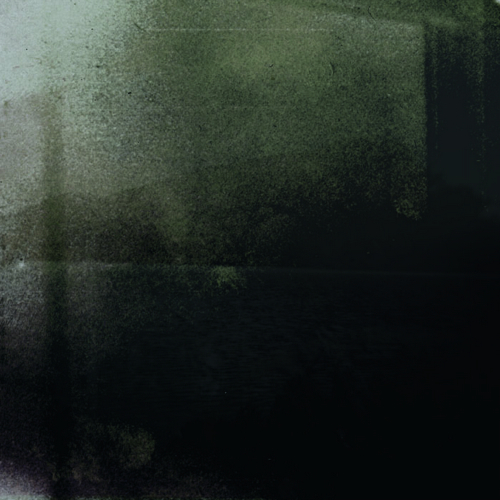
Gamma Knife cuts through his skull as soon as he falls asleep. His vision is dim and blurred at first but it brightens with every second and he feels moved by the blissful, eerie spectacle that unfolds before him. The knife suddenly reaches his mind and the bubble bursts. All becomes vivid as the chaos spreads around and all calmness drowns in its foaming depths. How long did it last? Can time be measured in a place like this? He doesn't know. But as the edge of radiation withdraws, he is in a peaceful place again. Soft light soothes his senses as sounds of music sustain his slumber. And it all ends with silence... Now that I lost most of you with my failed attempt at artistic writing, let's begin. 

As by far the most obscure album by Kayo Dot, Gamma Knife is a negative of itself. An amazing case of an album that contradicts itself and yet, by the power of its overarching idea, works wonderfully as a whole. Now, if I just came down to earth for a moment... Gamma Knife is intentionally made that way to create an impact. The album begins and ends with stunningly beautiful and soothing, choral chamber music recorded in studio, but at its core are three tracks recorded live in concert. Could it go any weirder? Well, yes! In short, the middle part is as eclectic, avant-garde and extreme as it could get in less than twenty minutes. It's basically like a surreal 20s film where avant-chamber music meets jazz, RIO and black metal and have a shot of absinthe. The black metal side is somewhat reminiscent of Deathspell Omega and early maudlin of the Well. Compared to other avant metal acts like Ephel Duath, Gamma Knife sounds much more organic and bold in its exploration of avant jazz and chamber music. Strong psychedelic presence in the vein of Swans is also noticeable. However, what binds all these elements together to give them common identity, is the unmistakable Kayo Dot vibe that, like a totem spirit, animates every single album by this band. 

I must admit that at first Gamma Knife didn't work for me as well as it does today, and I did not fully embrace its inner dualism until just a few months ago. Just like any other album by Kayo Dot, it's definitely not an easy one to get into but it's all the more rewarding once you do. Less focused on patient theme evolution of Choirs of the Eye and more on tight, aggressive experimentation known from Hubardo, Gamma Knife is a truly unique avant-garde rock ride. Let it sink in and you'll have one damn peculiar daydream every time you give it a spin.

Friday, March 27, 2015

NEUROSIS - Honor Found In Decay

We follow the Earth, the Earth follows the Stars...


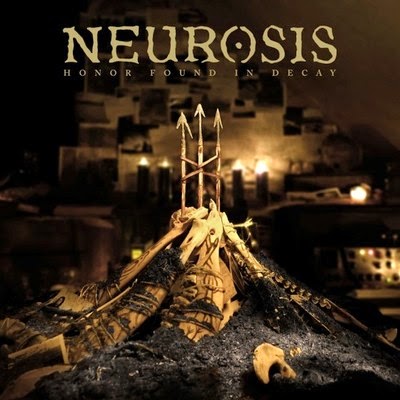
Despite having released ten records of which at least three have become timeless classics of post/sludge metal, the Oaklanders don't rest on their laurels. Honor Found in Decay is yet another step forward in their sustained evolution and I'm telling you, it's good. It's not, mind you, a matter of stylistic progress anymore, at least not in the sense we've got used to. These men don't intend to break the ground anymore, nor are they willing to exhibit the fiery aggression known from their early albums. Still, in my book Honor Found in Decay stands out as the most inspirational Neurosis record since Times of Grace. 

Noah Landis. This man is a boiling pot of inspiration and originality, never failing to add a unique layer to a theme or, when needed, take the lead. His synths and samples have always been the gray eminence of Neurosis, the defining element of every album since Through Silver in Blood. Don't get me wrong, though, the band is like a clockwork: take one cog out and it doesn't work. They've been together for almost 20 years and it shows; the incredible bond between them is not just noticeable in Honor Found in Decay, it animates the entire thing. Neurosis is one of those very few bands that can turn a bucket of raw sludge into a blissful, poetic, almost cleansing experience. And they really nailed it this time round. Honor Found in Decay is a heavy, lyrical, Kyuss-tinged sludge metal album, abounding with both tonal and atonal themes that work together perfectly. When it comes to harmony and disharmony, it is one of their most bipolar records, but the reason it works so well is that there's a consistent artistic vision that keeps the whole thing focused throughout. It certainly is the first Neurosis release to have the old elements and the new ones (mostly the singer-songwriter solo output by von Till and Kelly) work so well together. 

Honor Found in Decay is like a night ride through a southern desert, like a poem whispered by flickering shadows dancing around a bonfire. It's unrelenting yet calming; crushingly heavy yet soul-stirring; brooding and soulful but not devoid of hope. While it is not by any means as bold as The Eye of Every Storm was, it sounds much fresher than Given to the Rising ever has. I can safely say that Honor Found in Decay is the most mature and genuine effort by Neurosis in a long, long time. A contemplative, spiritual, understated, poetic, hypnotizing album. And yes, definitely recommended.

Saturday, November 1, 2014

Shinsekai yori (From the New World)

Stuck in a loop

(please note that it's a spoiler-free review)

We love fantasizing about the future of humanity, shaking our fists at the stars and anticipating amazing discoveries. Through oceans of blood and suffering, we keep pushing forward, always so hopeful about a better tomorrow. The faith we have in ourselves seesms in fact justified, as we can easily trace the progress made throughout history. Humanity has become more civilized, open-minded, peaceful. And even though there's still a lot of room for improvement, our achievements to date give us a firm conviction that we're on the right track... but are we, really? What if it's all just a lie we keep repeating, a convenient platitude that keeps us going? What if deep down in your heart, nothing has changed, ever?

We all have gone through that kind of story at least once in our lives. A story that you get hooked on gradually rather than from the get go, one that you don't necessarily enjoy as much as some more accessible ones. And yet it leaves a mark on your soul that won't ever fade away. Shinsekai Yori is definitely one of those. Set one thousand years in the future, the story of this anime bears no resemblance to any sci-fi futuristic settings I have seen so far. Some would expect a highly developed, space-faring civilization, others would settle for a singularity-based vision of human evolution or even a post-apocalyptic dystopia. That's where the series has already broken with convention and it only breaks more of it later on. There's almost no advanced technology in the anime whatsoever, except for electricity (very scarce) and some rudimentary accessories, and yet it doesn't seem post-apocalyptic. The closest reference for the world depicted in Shinsekai Yori would be the pre-medieval Japan seen through a utopian filter. If I were to classify the story in any way, I'd say it's a modern psychological fantasy, as it doesn't dabble in hard science and instead draws on an elegant concept of cantus. Telekinesis (on the molecular level), for this is what the term refers to, is handled with much care and insight in Shinsekai Yori. It's not just a superpower, it's a potent yet dangerous ability that can lead its user to almost godlike achievements, but also to unspeakable atrocities. The biggest of which is to be revealed in the last episode.

The aura of mystery and menace pervades the story long before it unveils any of its dark secrets. The animation, even though technically inferior to some high-profile productions, boasts a stunningly beautiful artistic design. Accompanied by equally effective soundtrack, as eclectic as the anime itself, Shinsekai yori is a thrilling and unsettling ride through a bitter-sweet utopia. It's all the more effective due to the profoundly allegoric character of the series. It is an elegant and painful critique not only of the caste-based society, government and blind faith people have in it, but also of the unspeakable evil that lies dormant in all of us. If only for the unprecedented setting and concept, the anime is worth watching. If, however, you keep a constant lookout for ambitious productions that venture where no other does, Shinsekai Yori is an absolute must-see.


Monday, October 27, 2014

DE MAGIA VETERUM - The Deification

Eradication of Self

I hereby announce that Maurice "Mories" de Jong is a warped god of madness, instilling awe and terror alike in all those who dare venture into his realm. And let's get one thing straight, it doesn't get more intense than this. Trust me, I've heard a lot. If anything compares, it can only be another Mories' project like Gnaw Their Tongues, Cloak of Altering or Aderlating. There is, however, something utterly fascinating about this abyssal poetry, and despite its painfully cathartic impact on my psyche, I keep listening. 

The fourth album by De Magia Veterum is another experimental black metal journey through the realm of unfathomable darkness. Ear-splitting production underlies discordant glissandi and sonic outbursts of soul-stirring madness, but wait, there's more! With sinister sampling and breakneck rhythm patterns, Mories intensifies this, already extreme, experience. THE DEIFICATION is in many ways a blend of MIGDAL BAVEL and THE DIVINE ANTITHESIS. It's dense and soulful as the former and dissonantly chaotic as the latter. And there's also what's always been setting Mories apart from other fairly similar artists like Deathspell Omega and Blut aus Nord. I'm not trying to belittle their status in any way, but unlike De Magia Veterum, you can still follow their reasoning. Here, it all sounds as if it already existed as a boiling plasma within the creator's subconscious, and he converted it into sounds no man could normally conceive. Despite being consistent and meaningful, the notion of structured chaos doesn't really apply here. Structured chaos is liable to deconstruction and analysis. THE DEIFICATION is rather a poetic depiction of chaos as it really is. 

In many ways, this is a masterpiece and an unbearable sonic assault at the same time. Let's just say it's a great addition to your metal collection as it may expand your horizons to the extent you would never imagine possible. Remember though, no matter what kind of extreme music style you're a fan of, De Magia Veterum may be just too much for you, or something you will love with a bizarre, ravaging affection.

Friday, September 6, 2013

DISTORTED HARMONY - Utopia


Six pieces of noble cheese

Traditional progressive metal is often considered to be cheesy, stagnant and derivative. Let's see... "traditional" and "progressive". Not a very fortunate choice of words. Isn't the first one an antonym of the other one? Well, it is, usually. Distorted Harmony managed to bend the rules of semantics though. UTOPIA is dripping with traditional prog metal elements - keyboards, synths and virtuosity. All this, however, is just a wrapping for some really well-crafted, inventive and emotionally charged metal music.

As usual, production is not without significance. What often bothers me about modern prog releases, is that the sound feels overproduced and artificial. Fortunately, UTOPIA's sound is indeed polished yet infused with a healthy dose of organic sharpness and spiced with a pinch of old-school prog rock softness. As a result, all assets of the album - intricate passages, theme changes with underlying symphonic prog basis - are well highlighted.

"Apparently Michael Bublé wouldn't be so dull if he stopped rehashing ideas of Frank Sinatra and started a prog metal band." That's what I thought right after hearing Misha Soukhinin's voice in "Kono Yume". His vocals are one of the best things about Distorted Harmony, no joke! Expressive, well trained and original. Especially when compared to typical prog metal vocalists, trying to sound like James LaBrie or Geoff Tate. Misha's voice reminds me of Michael Bublé (darn, I feel like I shouldn't be saying this) and his timbre suits the music very well. As for the music, UTOPIA consists of six intricate compositions, deeply rooted in classic progressive metal and underlaid with strong symphonic prog rock element. All that tinged with Opeth's eclectic approach to harmony and... some pop catchiness. At times I feel like some of the cheesy parts could have been avoided but as a whole, UTOPIA is a top-notch progressive metal release.

I'm not by any means a fan of traditional progressive metal. I don't like Dream Theater and Queensrÿche get on my nerves. Still, I really like this album. So, even if you're not into this sub-genre of metal music, give Distorted Harmony a chance to, ermm... distort your tastes... clumsy pun, eh?

CLOUDKICKER - Fade


Wordless poetry

Ben Sharp continues with his solo, hovering hundreds of meters above the ground, weaving wordless stories about the world from a bird's perspective. The only thing we know about the whole creative process, is that it's set in the American airspace. Cloudkicker's third full-length album is just that: American airspace post-rock ambient-djent metal. That requires some explanation, I guess...

In the previous album Ben Sharp created a simple yet mesmerizing collection of post-rock songs. Even though his latest release may be considered as a return to the roots, it's still a logical step forward from its predecessor. FADE is basically an outcome of putting LET YOURSELF BE HUGE and BEACONS together. The atmosphere is dreamy yet tense, reminding me of the feeling you get while looking at the world through an airplane window. While on BEACONS the ambiance was determined by the album's dark concept, here it's rather reminiscent of loose impressions from a flight or trip across the States. The feeling of freedom you get while on the road, melancholy and anxiety triggered by the city's night panorama, loneliness in a nameless crowd - all that can be found in FADE.

Even though the music can bother me sometimes with its American pop-punk undertones, post-rock climaxes crafted by Ben Sharp are emotional to say the least. Ambient parts impart even more of ethereal feel to the album which makes it a soothing listen despite its undeniable heaviness. Most of all though, Cloudkicker finally found a happy medium between repetition and variety of themes. It's a well composed and varied post-metal album and I can safely say it's Ben Sharp's best.

- Available for download at any price at http://cloudkicker.bandcamp.com -